Ions: From Water Purification to Battery Breakthroughs
Ions, charged atoms that are fundamental to countless chemical reactions, are quietly shaping our world. From ensuring safe drinking water to powering our devices, their role is often unseen but ever-present. This article delves into the science of ions, their historical discovery, and their groundbreaking application in next-generation battery technology.
The Ubiquitous Ion: An Unseen Force
The smooth operation of modern life relies on a fundamental concept in chemistry: the ion. These electrically charged atoms or molecules are the silent conductors behind everything from the water that flows from our taps to the energy stored in our mobile phones. Without the movement and interaction of ions, many of the conveniences and necessities we take for granted would simply cease to function. Understanding ions is key to appreciating the intricate mechanisms driving both natural processes and technological innovation.
While the term 'ion' might sound technical, its implications are deeply practical. These charged particles are the backbone of numerous chemical reactions, biological processes, and technological advancements. Their ability to carry an electrical charge makes them indispensable for electricity transfer, chemical bonding, and facilitating reactions that are crucial for public health and advanced energy storage. This article explores the fundamental nature of ions, tracing the scientific journey of their discovery and highlighting their transformative potential in current research and everyday applications.
Understanding Ions: Atoms in Charge
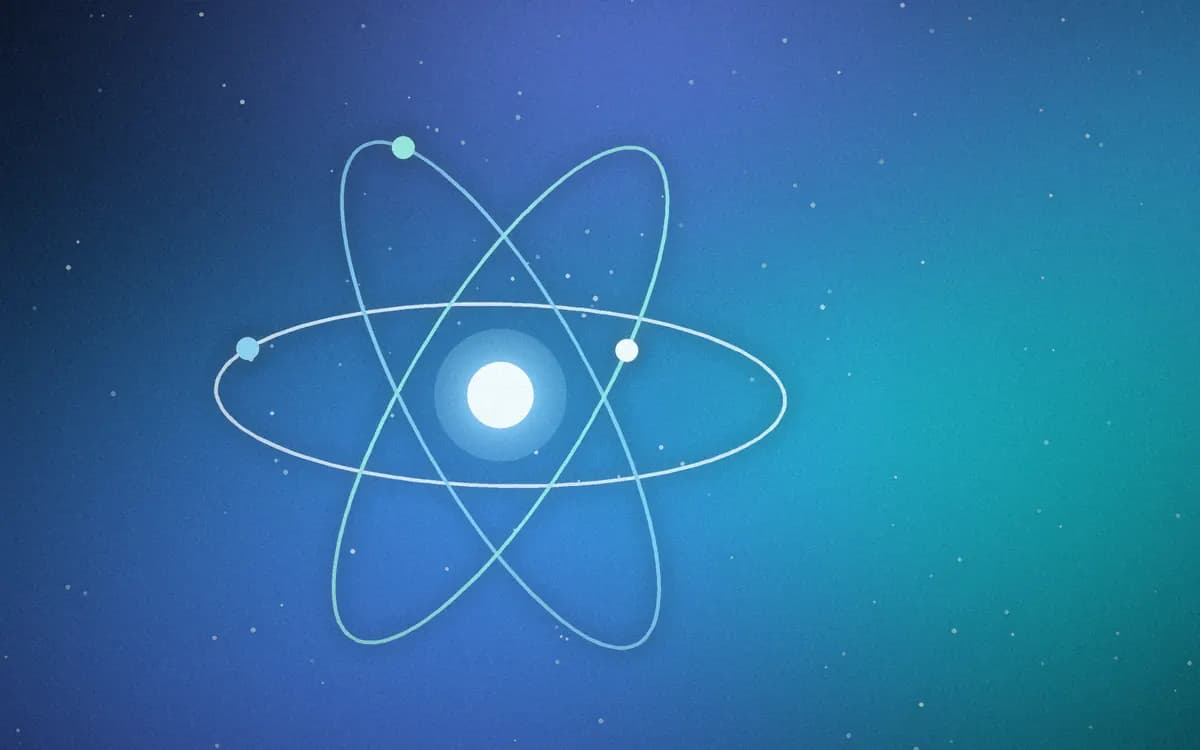
At its core, an ion is an atom that has acquired an electrical charge. Atoms are naturally neutral, possessing an equal number of positively charged protons in their nucleus and negatively charged electrons orbiting it. This balance is disrupted when an atom either gains or loses one or more electrons. The resulting imbalance between protons and electrons gives the atom a net positive or negative electrical charge, transforming it into an ion.
When an atom loses electrons, it has more protons than electrons, resulting in a net positive charge. These positively charged ions are called cations. Conversely, when an atom gains electrons, it accumulates more negative charges than positive ones, leading to a net negative charge. These are known as anions. This gain or loss of electrons is a fundamental process that drives countless chemical reactions, as the opposite charges of cations and anions create electrostatic forces that hold them together in ionic compounds like table salt (sodium chloride).
The Legacy of Michael Faraday and Ionic Conductivity
The scientific understanding of ions and their role in electrical conductivity owes a significant debt to the pioneering work of Michael Faraday in the 19th century. Through meticulous experiments in electrochemistry, Faraday observed that certain substances, when dissolved in water, could conduct electricity. This groundbreaking discovery strongly suggested the presence of mobile charged particles within the solution, a radical idea at the time.
Faraday's rigorous investigations not only provided empirical evidence for ionic behaviour but also established the foundational terminology still used today. He coined the terms 'ion,' 'cation,' and 'anion' to describe these charged species and their movement during electrolysis. His work laid the essential groundwork for modern electrochemistry, demonstrating that electricity could be used to drive chemical reactions and that chemical reactions could generate electrical currents, all mediated by the movement of these charged particles.
Evolution of Ionic Understanding
Since Faraday's initial explorations, the scientific understanding of ions has evolved dramatically. Advances in atomic theory, quantum mechanics, and the development of sophisticated analytical instruments have allowed scientists to probe the behaviour of ions at an unprecedented level of detail. We now possess a much deeper comprehension of how ions form, move through different media, interact with each other and with surrounding molecules, and influence the macroscopic properties of materials.
This enhanced knowledge has moved beyond simply acknowledging the existence of ions. Researchers can now precisely model and predict ionic pathways, quantify their mobility, and understand their precise role in complex systems. This deeper insight, built directly upon Faraday's foundational work, has been instrumental in driving innovation across a vast spectrum of scientific and technological fields, from medicine and environmental science to advanced materials and energy storage.
Ions in Action: Water Purification and Public Health
One of the most critical and widespread applications of ionic chemistry is in ensuring public health through water purification. Chlorine ions, for instance, are a cornerstone of modern water treatment. When added to water, chlorine forms hypochlorous acid, which then dissociates into hydrogen ions and hypochlorite ions. These reactive ions effectively disrupt the cellular structures of harmful bacteria and viruses, rendering them harmless and making drinking water safe for consumption. This chemical disinfection process is a testament to the practical power of ion-mediated reactions.
Beyond simple disinfection, ionic principles are also central to advanced water treatment technologies like electrochemical desalination. This process leverages electrical currents to drive ions, specifically charged salt particles (like sodium and chloride ions), out of water. By applying an electric field, water molecules are encouraged to move towards electrodes of opposite charge, leaving the salt ions behind. This offers a promising and energy-efficient pathway for producing fresh water from saline sources, a crucial development for arid regions and coastal communities facing water scarcity.
Harnessing Ions for Energy Storage: The Battery Revolution
Batteries, the workhorses powering our portable electronics and electric vehicles, represent one of the most dynamic frontiers for ionic chemistry. The core principle behind most batteries involves the controlled movement of ions between two electrodes. In a typical battery, ions travel through an electrolyte solution or solid material, carrying charge and completing an electrical circuit. This ionic current, coupled with electron flow through an external circuit, generates the electrical energy we utilize.
Recent scientific discovery and research breakthrough in materials science are pushing the boundaries of battery technology. A notable advancement involves sodium-ion batteries, which are emerging as a sustainable and cost-effective alternative to traditional lithium-ion systems due to the greater abundance and lower cost of sodium. Researchers are focusing on novel electrode materials that can efficiently store and release sodium ions, thereby enhancing battery capacity and performance.
A Breakthrough in Sodium-Ion Battery Capacity
A significant research breakthrough has emerged from the University of Surrey, focusing on enhancing the charge storage capacity of sodium-ion batteries. Traditionally, manufacturers of sodium vanadium oxide materials would remove water during the production process, assuming this would improve performance. However, the Surrey team's study, published in the Journal of Materials Chemistry A, revealed the opposite to be true.
By retaining the natural water content within a nanostructured material known as sodium vanadate hydrate (NVOH), the researchers found they could nearly double its charge storage capacity compared to conventional sodium-ion materials. This innovation is remarkable not only for its impact on energy density but also for its efficiency, maintaining impressive performance across more than 400 charge-discharge cycles. This suggests that carefully controlled water retention can be a key factor in unlocking higher performance in sodium-ion battery technology.
Dual-Purpose Technology: Water Purification and Energy Storage
Perhaps even more exciting is the dual functionality observed with this water-retaining sodium vanadate hydrate material. The research team discovered that the NVOH material not only excelled at storing charge but also demonstrated efficacy in electrochemical desalination when submerged in saltwater. This implies a potential for batteries that can simultaneously serve as energy storage devices and water purification systems.
This dual capability holds immense promise, particularly for coastal regions or remote areas where access to both reliable energy and clean water is a challenge. Imagine a device that can store solar energy and, when needed, use a portion of that stored energy to desalinate surrounding water. Such integrated solutions represent a significant step towards sustainable resource management and could revolutionize how communities in water-scarce environments meet their basic needs.
Future Potential and Limitations
The advancements in understanding and utilizing ions, particularly in areas like water purification and advanced battery chemistries, highlight a powerful convergence of fundamental science and practical application. The discovery of water's role in enhancing sodium-ion battery capacity and the potential for dual-purpose desalination-storage devices are prime examples of how continued research and development can yield unexpected and highly beneficial outcomes.
However, it is crucial to acknowledge that this technology is still evolving. While sodium-ion batteries offer a promising sustainable alternative, they currently lag behind lithium-ion batteries in terms of energy density and cycle life in many commercial applications. Furthermore, the long-term stability and scalability of materials like water-retaining sodium vanadate hydrate need further rigorous testing and validation before widespread adoption. The successful integration of these technologies will require overcoming engineering challenges related to manufacturing, cost-effectiveness, and performance optimization across diverse operating conditions.
- #Michael Faraday
- #batteries
- #conductivity
- #electrochemistry
- #ions
- #water purification
Comments